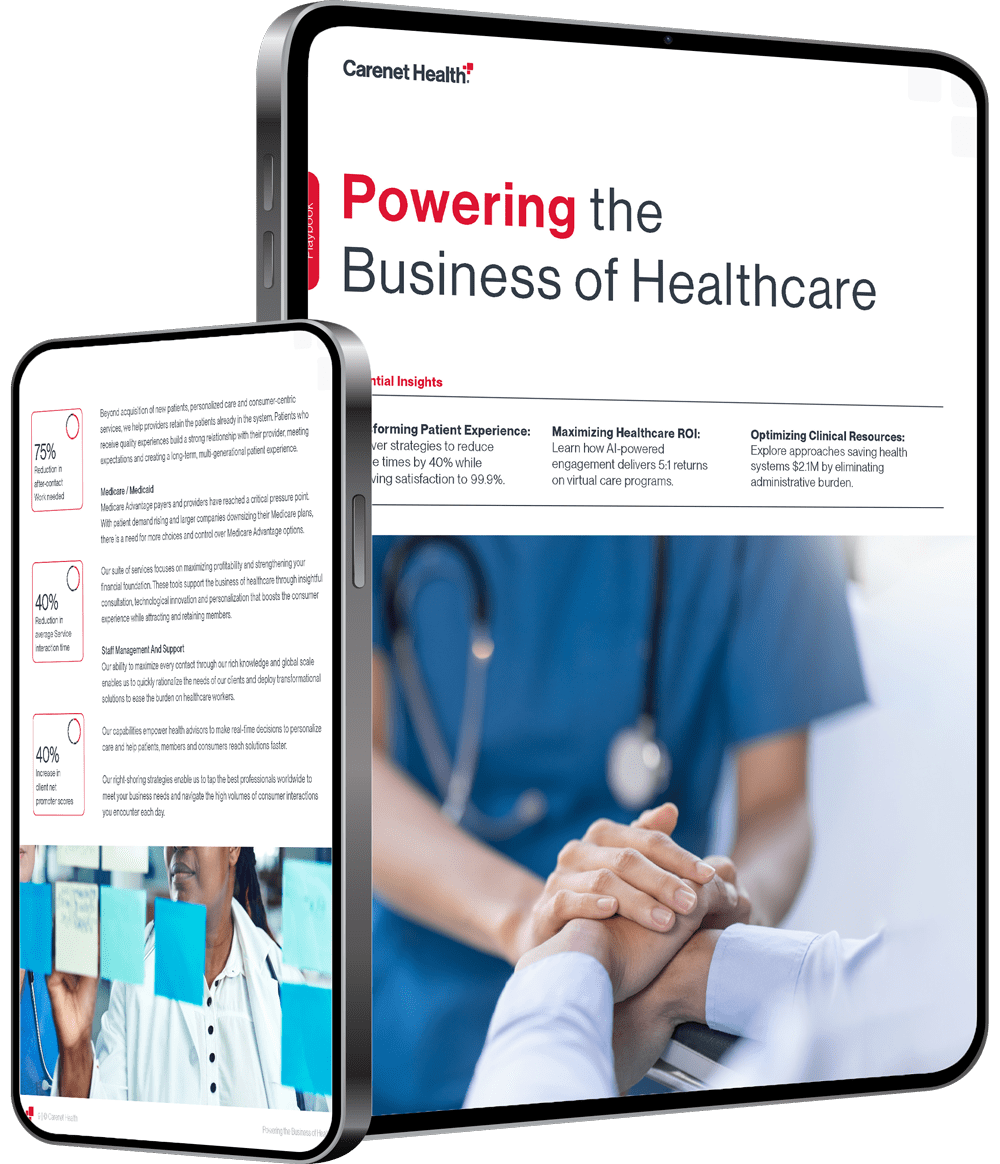
This proven playbook has helped 500+ healthcare organizations cut service times by 40%, achieve 99.9% patient satisfaction, and save millions in operational costs.
Focus500+
Healthcare organizations using these methods
Patient satisfaction99.9%
Patient satisfaction rate achieved
Efficiency40%
Reduction in service times
ROI$72M
Largest single ROI documented
The problem
Overview of healthcare inefficiencies
Healthcare organizations lose an average of $2.1 million annually to operational inefficiencies that directly impact patient satisfaction and business outcomes. These inefficiencies represent missed opportunities to deliver exceptional care.
Research shows that healthcare inefficiencies cost the U.S. healthcare system over $935 billion annually, with individual organizations experiencing significant impacts on both patient experience and operational margins.
Communication gaps Between departments that delay care decisions
Manual processes That consume 40% more staff time than automated alternatives
Long wait times That frustrate patients and reduce satisfaction scores
Fragmented patient data Across multiple systems, limiting care coordination
Inefficient appointment scheduling Leading to no-shows and revenue loss
Healthcare inefficiencies cost the U.S. system over $935 billion annually. For individual organizations, that translates to an average of $2.1M lost every year to problems that are solvable.
The solution
How to improve patient satisfaction
Patient satisfaction isn't just about bedside manner. It's about creating seamless experiences that make healthcare feel less like a burden and more like genuine care. Organizations implementing comprehensive patient engagement strategies typically see satisfaction scores improve by 15 to 30% within six months.
Streamline communication touchpoints
Patients expect timely, relevant communication. Organizations using automated, personalized outreach see 25% higher satisfaction scores than those relying solely on manual communication.
Reduce administrative friction
Simplify appointment scheduling, insurance verification, and follow-up processes. When patients spend less time navigating administrative hurdles, they focus more on their health outcomes.
Leverage technology for personalization
AI-powered systems can predict patient needs, customize care recommendations, and proactively address concerns before they escalate into dissatisfaction.
Implement proactive care management
Rather than waiting for patients to reach out with problems, successful organizations anticipate needs and provide solutions before issues arise.
Inside the playbook
What is a patient engagement playbook
A patient engagement playbook is your organization's strategic roadmap for creating meaningful connections throughout the entire healthcare journey. It's your blueprint for turning every patient interaction into an opportunity to build trust, improve outcomes, and drive sustainable growth.
Strategic framework
Clear definitions of your target patient populations
Mapped communication preferences and channels
Defined touchpoints across the care continuum
Operational guidelines
Standardized processes that ensure consistent experiences
Technology integration that supports rather than complicates care
Staff training protocols that align with engagement objectives
Measurement and optimization
KPIs that matter to both patients and business outcomes
Regular feedback loops that drive continuous improvement
ROI metrics that demonstrate value to leadership
Market analysis
Healthcare business challenges
Current industry pain points and market pressures
Digital transformation challenges in healthcare
Consumer demand trends and expectations
Staffing and operational efficiency gaps
AI solutions
AI-powered healthcare framework
5 core areas of AI-assisted CX solutions
Technology integration strategies
Implementation roadmap template
Risk mitigation and compliance considerations
Case studies
Real client success stories
Academic health system: $72M annual ROI
Medicare Advantage plan: $52M revenue increase
Multi-system network: $2.1M cost savings
Implementation timelines and key success factors
Improved patient outcomes
Engaged patients are 3x more likely to adhere to treatment plans.
Reduced operational costs
Streamlined processes can cut administrative expenses by up to 40%.
Enhanced staff satisfaction
Clear processes reduce burnout and improve workplace efficiency.
Sustainable growth
Satisfied patients generate 18% more revenue through referrals and retention.
Real performance data
Real performance data. Real healthcare partners.
Stop guessing. You'll see operational improvements like these when you implement strategies in this playbook.
$72M
Academic health system
Annual ROI achievement through comprehensive patient engagement strategy and AI-assisted care coordination.
$52M
Medicare Advantage plan
Revenue increase driven by improved member engagement, retention, and Star Ratings performance.
$2.1M
Multi-system network
Annual cost savings through operational streamlining and reduction in administrative overhead.
Who it's for
Perfect for healthcare leaders
Healthcare providers
Hospitals, health systems, and physician groups looking to improve patient acquisition, reduce workforce strain, and enhance care delivery.
Health plans and payers
Insurance companies, government programs, health plans, and employers aiming to improve member experience and optimize costs.
Health tech and services
Health technology and services companies striving to support patients, providers, and payers, and sustain competitive advantages.
Why Carenet
We don't just provide solutions. We become your strategic partner.
Healthcare organizations choose Carenet because we transform patient engagement from a cost center into a competitive advantage.
Proven track record
500+ healthcare organizations trust Carenet with their patient engagement
99.9% patient satisfaction rate across our client base
Average 40% reduction in service times for partner organizations
Industry-leading technology
AI-powered healthcare CRM with 360-degree view of the patient journey
Built specifically for healthcare complexities, not generic solutions
Personalized engagement at scale
Comprehensive expertise
Clinical knowledge: our team understands healthcare workflows, not just technology
Regulatory compliance: HIPAA-compliant solutions that protect patient data
Scalable implementation for single practices to large health systems
Measurable results
300 to 500% ROI within 12 months for most clients
Average 25% improvement in operational efficiency
Consistent 15 to 30% improvement in satisfaction scores
Questions
Frequently asked questions
The primary causes include communication gaps between departments, manual processes that consume excessive staff time, fragmented data systems across multiple platforms, inefficient scheduling processes, and lack of standardized workflows. These issues compound to create delays, errors, and patient frustration throughout the care journey.
Healthcare organizations lose an average of $2.1 million annually to operational inefficiencies. On a national scale, inefficiencies cost the U.S. healthcare system over $935 billion per year through wasted resources, duplicate processes, administrative burden, and poor care coordination.
Patient complaints typically stem from long wait times, communication delays, repeated information requests, scheduling difficulties, and feeling like they're navigating a complex system alone. When administrative processes are broken, patients lose confidence in the quality of care they'll receive.
Common warning signs include staff spending excessive time on manual data entry, patients calling multiple times for simple requests, departments working in silos without shared information, high patient no-show rates, staff overtime due to process delays, and declining patient satisfaction scores.
Inefficiencies directly translate to patient frustration through longer wait times, communication breakdowns, scheduling problems, and the perception that their time isn't valued. Research shows that operational problems are the leading cause of poor patient experience ratings.
Patient engagement drives measurable business outcomes: engaged patients are 3x more likely to adhere to treatment plans, generate 18% more revenue through referrals, and cost 30% less to serve due to improved communication and care coordination. It's also directly linked to better health outcomes.
Patient satisfaction measures how happy patients are with their experience, while patient engagement measures how actively involved they are in their care. Satisfaction is reactive (how did we do?), while engagement is proactive (how involved is the patient in their health journey?).
While technology can accelerate improvements, many inefficiencies can be addressed through process standardization, staff training, improved communication protocols, and workflow optimization. However, sustainable, scalable solutions typically require some level of technology integration to maintain consistency and measure results.
Download your free playbook now
Get instant access to powering the business of healthcare.